
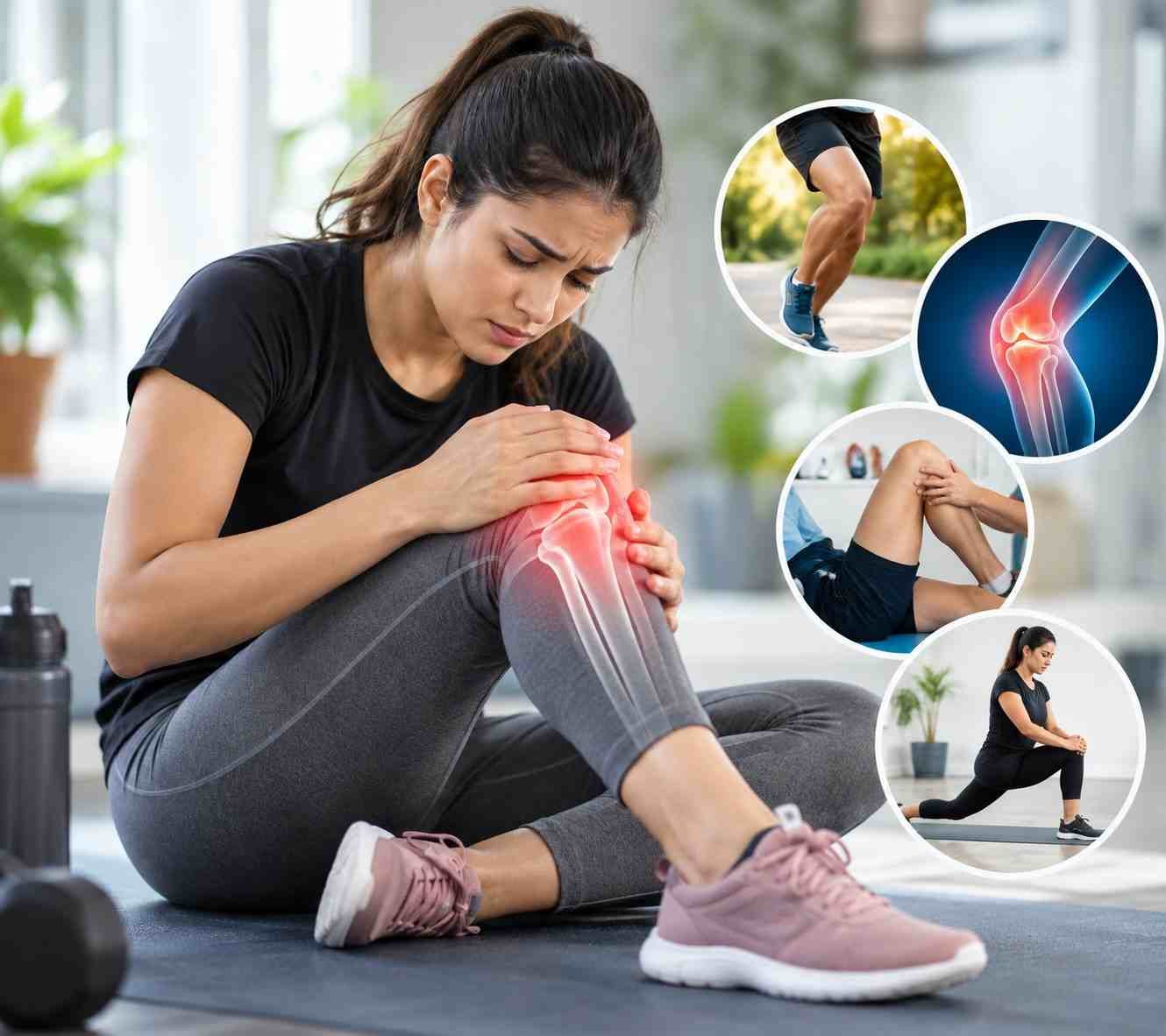
Knee Pain in Young Adults: Causes, Symptoms, Treatment & Prevention
Knee pain is not only something that older adults experience. Many people in their 20s and 30s also deal with knee discomfort, especially if they are physically active, spend long hours sitting, regularly work out, or have had a previous injury.
Sometimes the problem starts after a workout or sports activity. In other cases, it develops gradually and becomes noticeable while climbing stairs, squatting, running, or getting up after sitting for a long time.
Understanding what may be causing the problem is important because simply resting whenever symptoms appear may provide temporary comfort without addressing the factors that are contributing to them.
Is Knee Pain Common in Young Adults?
Knee pain can occur at any age, including during your 20s and 30s. In younger adults, it may be associated with overuse, sudden changes in physical activity, sports, muscle weakness, previous injuries, or the way the knee and surrounding muscles move during different activities.
For some people, the symptoms are mild and appear only during particular movements. Others may notice discomfort during everyday activities such as walking, using stairs, sitting for long periods, or getting up from a chair.
This is why recurring symptoms should not simply be dismissed as normal soreness.
Common Causes of Knee Pain in Young Adults
There is no single cause of knee pain in young adults. The reason can be different for each person depending on their activity level, previous injuries, strength, movement patterns, and daily routine.
1. Overuse and Sudden Changes in Exercise
One of the common reasons for knee problems in younger adults is increasing physical activity too quickly.
For example, someone may suddenly start running every day, increase their gym sessions, add heavier weights, or return to sports after several months without training.
The knee and surrounding muscles need time to adapt to changes in workload. When activity increases suddenly without enough recovery, symptoms can gradually develop.
2. Muscle Weakness
The knee relies on the muscles around the hips, thighs and legs for support and movement.
When these muscles are weak or lack adequate control, certain activities may place additional stress on the knee. This can become noticeable during squats, running, jumping, climbing stairs, or other repetitive movements.
Strengthening the appropriate muscles can therefore be an important part of managing certain types of knee problems.
3. Sports and Gym Injuries
Running, football, cricket, badminton, basketball and other sports can put considerable demands on the knee.
Sudden changes in direction, awkward landings, twisting movements or direct impact can lead to injuries. Even a relatively minor injury can continue to cause symptoms if the knee is placed under heavy stress before it has recovered properly.
4. Patellofemoral Pain
Pain around or behind the kneecap is another common reason younger adults may experience knee symptoms.
It can become noticeable while squatting, climbing stairs, running, jumping or sitting with the knee bent for a long period.
Unlike an injury that happens during one specific moment, this type of pain may develop gradually, making it difficult to identify exactly when the problem started.
5. Long Hours of Sitting
A desk job, studying for several hours, driving, or spending a large part of the day sitting can reduce the amount of movement you get throughout the day.
Some people notice discomfort or stiffness after remaining seated for a long time and then standing up.
Sitting may not be the only reason behind the problem, but when it is combined with low activity, muscle weakness and sudden intense workouts, it can become part of a larger movement-related issue.
6. Previous Knee Injuries
A knee injury from sports, exercise or an accident can continue to influence movement even after the initial pain has disappeared.
If rehabilitation was incomplete or you return to demanding activities too quickly, symptoms may come back when the knee is placed under greater load.
What Are the Symptoms of Knee Pain?
Symptoms can vary depending on the underlying problem.
Some people experience:
- Pain around the kneecap
- Pain during or after exercise
- Pain while climbing or coming down stairs
- Stiffness after sitting
- Swelling around the knee
- Tenderness
- Difficulty bending or straightening the knee
- A feeling of weakness
- Instability or a feeling that the knee may give way
- Clicking or popping
- Discomfort while squatting
The location and pattern of symptoms can provide useful clues, but they do not always identify the exact cause on their own.
Knee Pain in Ladies: Is It Different?
Knee pain in ladies can have many of the same causes seen in men, including sports injuries, overuse, muscle weakness, previous injuries and movement-related problems.
However, some knee conditions are seen more frequently in women. Differences in anatomy, muscle strength, activity patterns and movement mechanics may contribute to this.
This does not mean that every woman with knee pain has the same problem. The symptoms and individual circumstances still need to be considered when deciding what treatment may be appropriate.
Why Do My Knees Hurt Without an Injury?
Not every case of knee pain starts with a fall, accident or sports injury.
If you are wondering why do my knees hurt even though you cannot remember injuring them, the answer may be related to repeated stress, a sudden change in your activity level, muscle weakness, prolonged sitting, or the way your knee is loaded during exercise and everyday movement.
Gradually developing pain is particularly easy to ignore because there may not be one obvious event that caused it.
However, if the same symptoms keep returning, it is worth getting them assessed rather than continuing to work around the pain.
What to Do for Knee Pain?
What to do for knee pain depends on how it started and what activities are making it worse.
If the symptoms have recently appeared, you can start by reducing activities that clearly aggravate the knee. This does not necessarily mean avoiding all movement.
Depending on your symptoms, useful steps may include:
- Reducing high-impact activities temporarily
- Avoiding sudden increases in exercise intensity
- Returning to workouts gradually
- Maintaining comfortable movement
- Working on appropriate strength and mobility
- Allowing enough recovery between demanding activities
- Getting professional advice if symptoms persist
If pain continues despite modifying your routine, repeatedly returns after exercise, or starts affecting your everyday activities, an assessment can help identify what may be contributing to the problem.
Knee Pain Treatment: What Options Are Available?
The right knee pain treatment depends on the cause and the individual’s symptoms.
A proper assessment may consider your movement, muscle strength, flexibility, previous injuries, activity level and the movements that trigger your symptoms.
Depending on the situation, treatment may involve:
Exercise and Rehabilitation
Specific exercises can help improve strength, mobility and movement control. The exercises should be selected according to the individual’s condition rather than following the same routine for every type of knee pain.
Activity Modification
You may not need to stop exercising completely. Instead, activities that consistently increase your symptoms can be modified while your strength and tolerance gradually improve.
Manual and Chiropractic Care
Hands-on care may be considered when musculoskeletal or movement-related factors are contributing to the symptoms.
At Chiropractor 360, the focus is on understanding the individual rather than simply treating the area where pain is felt. An assessment can help identify movement and musculoskeletal factors that may be contributing to your symptoms and guide an appropriate care and rehabilitation plan.
How Can You Get Knee Pain Relief?
The right approach to knee pain relief depends on what is causing the symptoms.
For example, if pain started after suddenly increasing your workout, reducing the aggravating activity and gradually rebuilding your strength may be more appropriate than repeatedly pushing through the discomfort.
Temporary relief is useful, but recurring pain deserves more attention. If the same symptoms return whenever you run, squat, climb stairs or restart your workouts, finding the underlying contributing factors can be more helpful than repeatedly waiting for the pain to settle.
How Can You Prevent Knee Pain?
Not every knee problem can be prevented, but some habits can reduce unnecessary stress on the knees.
Increase Activity Gradually
If you are returning to exercise after a break, start at a manageable level and increase intensity gradually.
Build Strength
Regular strength training can help the muscles around the hips and legs support everyday activities and exercise.
Warm Up Before Exercise
Light movement before running, sports or strength training can help prepare your body for more demanding activity.
Pay Attention to Technique
If a particular movement consistently causes discomfort, do not simply push through it. Your technique, exercise selection or training load may need to be reviewed.
Give Your Body Enough Recovery
Exercise is only one part of a healthy routine. Adequate recovery between demanding sessions allows your body to adapt to training.
When Should You Get Your Knee Assessed?
Occasional mild discomfort does not always mean there is a serious problem. However, professional assessment is worth considering when the symptoms persist, repeatedly return, or start affecting your normal activities.
You should seek prompt medical attention if you:
- Cannot put weight on the knee
- Have significant swelling
- Cannot properly bend or straighten the knee
- Experience repeated instability or giving way
- Notice an obvious change in the shape of the knee
- Develop severe pain after an injury
- Have a hot, red and painful knee, particularly with fever
These symptoms may require medical evaluation rather than self-treatment.
Don’t Ignore Recurring Knee Pain
Knee pain in young adults can have many different causes. It may be related to exercise, sports, muscle weakness, previous injuries, prolonged sitting or changes in the way the knee is loaded during everyday activities.
The important thing is to pay attention when symptoms keep coming back.
If knee pain is affecting your workouts, work, walking or everyday activities, Chiropractor 360 can assess your movement and musculoskeletal health and help determine an appropriate treatment and rehabilitation approach.
Book an appointment with Chiropractor 360 today to get your knee pain properly assessed and take the next step towards moving more comfortably.
Frequently Asked Questions
1. Why do my knees hurt if I am young?
There can be several reasons, including overuse, sports or gym-related stress, muscle weakness, previous injuries and movement-related problems. Pain can also develop gradually without one specific injury.
2. What is the main cause of knee pain in young adults?
There is no single cause. Overuse, sudden increases in physical activity, muscle weakness, sports injuries and problems around the kneecap are some possible contributors. The actual cause depends on the individual’s symptoms and circumstances.
3. What to do for knee pain at home?
If the pain is mild and recently started, reducing activities that aggravate the knee and avoiding sudden increases in exercise may help. If symptoms persist or repeatedly return, getting the knee assessed is a better option than relying only on home care.
4. When should I see a chiropractor for knee pain?
You can consider an assessment when knee pain keeps returning, affects your movement, or limits exercise and daily activities. A chiropractor can assess relevant musculoskeletal and movement-related factors and determine whether chiropractic care and rehabilitation may be appropriate.


No comment